Budgeting starts with cash flow, not a perfect paycheck
You can’t budget a month you haven’t been paid for yet. When income jumps around, the safest starting point isn’t “what I hope to make,” it’s the cash that’s actually in your account and the bills that will hit before the next deposit clears. That shift matters because it changes the question from “How much can I spend this month?” to “How long can this money carry me?”
Think of your budget as a plan for timing, not just totals. Rent due on the 1st, insurance on the 12th, a credit card on the 20th—those dates don’t care that your client pays late. Cash-flow budgeting means you line up real due dates against real money, then decide what gets protected first. It’s not as tidy as a paycheck-based budget, and it can take a couple of weeks of tracking to see the pattern, but it holds up when your income doesn’t.
Map your income patterns without pretending they’re consistent
Most people with uneven income already know it’s “up and down,” but they still plan like it will behave. A better move is to map what actually happens: when money arrives, how much tends to show up, and how often it’s late. Pull the last 6–12 months of bank deposits (not invoices), group them by source if you can, and write down two numbers: your lowest typical month and your “okay, this happens a lot” month. You’re not hunting for an average that will make you feel better; you’re looking for the floor that keeps you safe.
Also mark the gaps. If you regularly go 10–20 days between deposits, that gap is a real planning constraint, not a motivation problem. This step can feel annoying because it exposes how seasonal or unpredictable your work is, but it gives you a reliable baseline to build around.
Set a ‘bare minimum’ spending level you can defend
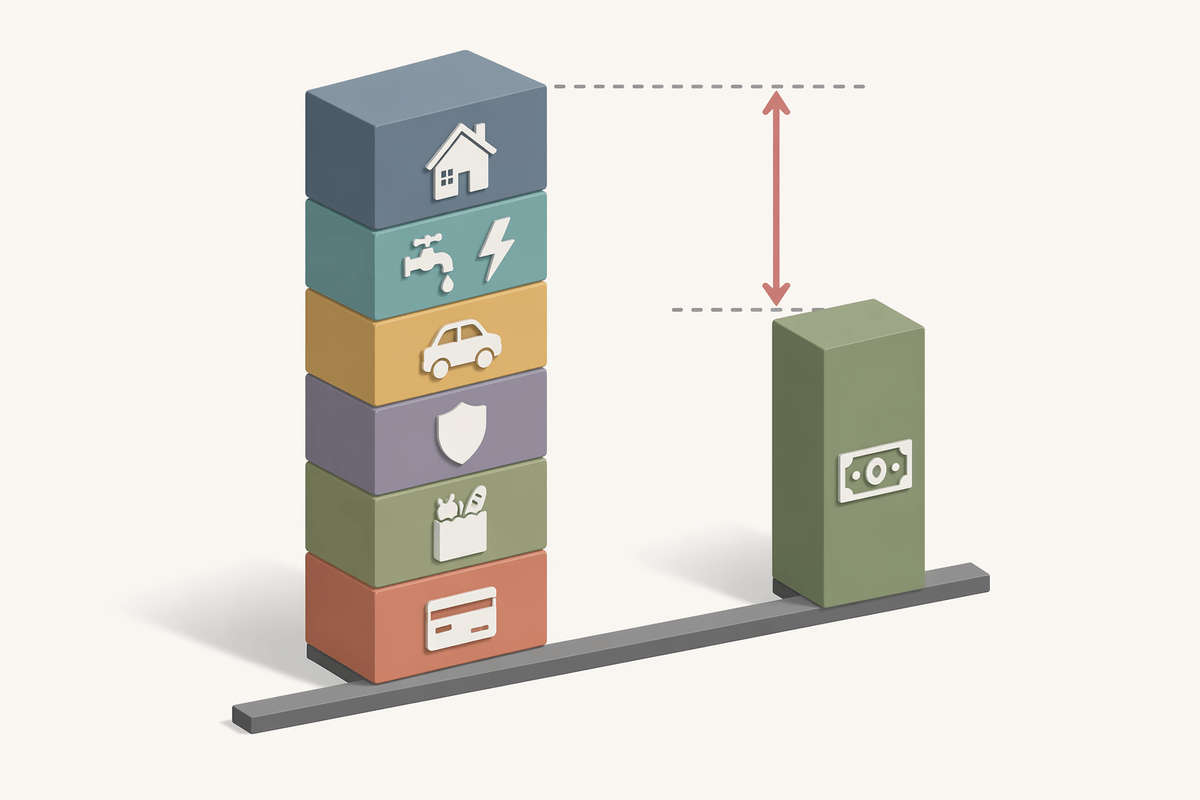
You’ve seen the floor in your income. Now you need a spending floor that matches it. Your “bare minimum” isn’t a punishment budget and it isn’t a list of goals. It’s the set of expenses you can defend paying even in a low month without borrowing. Start with housing, basic utilities, minimum debt payments, transportation you need to earn, insurance, and a realistic groceries number. Leave out anything that can pause for 30 days without breaking your life.
Put real numbers on it by looking at what those categories actually cost you over the last few months, then choose amounts you can repeat. If your low typical month is $3,200 and your bare minimum comes to $3,900, that gap is useful information, not failure. It means you either need to reduce fixed commitments (hard but powerful), increase the “floor” income you can count on, or add a buffer so low months don’t force panic decisions. The honest baseline is what makes the rest of the system work.
Pick a budgeting system that survives uneven months
A budgeting system that works for uneven income does two things well: it prioritizes and it waits. One simple option is a “priority list” budget: every dollar that comes in gets assigned in order—bare minimum bills first, then upcoming bills, then groceries/transport, then buffers, then everything else. Another strong option is a cash-based envelope system (physical or digital), where categories are funded only when money arrives. If you prefer spreadsheets or apps, a zero-based budget can work too, as long as you budget only money you have and include a holding category like “next bills” so extra cash doesn’t accidentally become lifestyle spending.
Whatever you pick, build two modes: a Low Month plan that funds only the bare minimum, and an Okay/Good Month plan that funds the bare minimum plus buffers and a few quality-of-life categories. The trade-off is time: these systems require frequent small decisions, and some apps charge monthly fees, but the payoff is fewer “surprise” overdrafts and less guessing.
Build buffers: bill timing, sinking funds, and a paycheck cushion
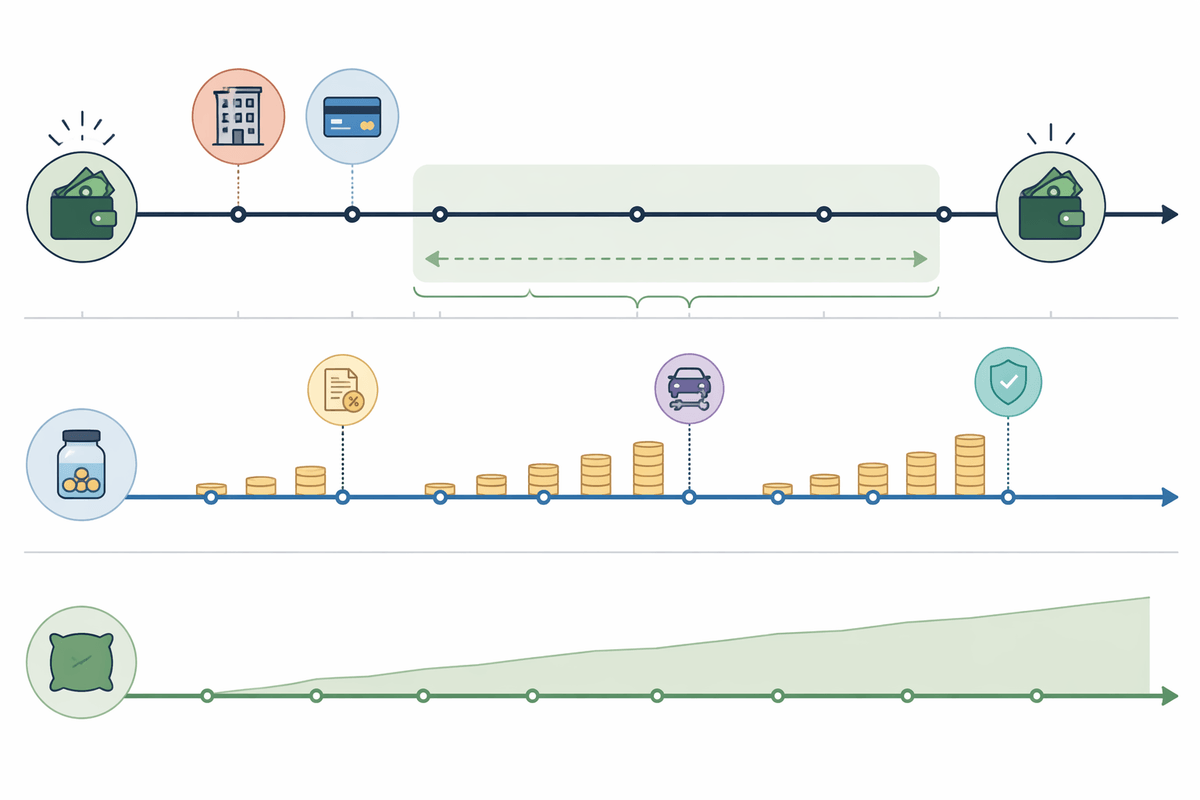
You’ve already lined up due dates against real cash, so the next move is to stop every bill from being a “now” problem. Start with bill timing. If rent and a big credit card payment hit before you usually get paid, build a small “bills buffer” category that always holds the next 2–4 weeks of known bills. Even $300–$500 can prevent late fees when a client runs behind.
Then add sinking funds for lumpy expenses you can predict but not monthly-budget well: quarterly taxes, car repairs, annual renewals, gifts, slow work months. Pick one or two, set a target and a date, then fund them whenever income arrives (not just when it’s due). Finally, work toward a paycheck cushion—money that lets you live on last month’s income. It’s not fast; it may take several good months, and it can mean saying no to upgrades for a while. The payoff is decisions made from stability instead of urgency.
Rules for good months so they don’t create bad ones
A good month can be dangerous because it feels like you’ve finally “caught up,” so spending expands and commitments sneak in. The simplest rule is: good-month money pays for future you before it pays for present you. When a larger deposit hits, fund your bare minimum through the next gap first, then top off your bills buffer, then make the next sinking-fund contribution (especially taxes). Only after those are solid do you raise flexible spending.
Another rule: don’t turn a temporary bump into a permanent bill. Upgrading your apartment, adding subscriptions, or taking on a new car payment locks you into a higher bare minimum that your low months still have to carry. If you want to celebrate, keep it one-time: replace a worn-out tool, book a modest weekend, or buy back time with a small service. The constraint is real—building buffers can feel slow, and it may mean watching peers “level up” faster—but the trade is fewer panic weeks and less reliance on credit when work dips.
Make it easier with automation and a weekly money check-in
Most budgeting breaks down in the boring middle: you get busy, a payment hits, and you forget to adjust. Automate the parts that don’t need judgment. Put all recurring bills on autopay if your buffer can cover them, and set automatic transfers the day money lands: a percentage to taxes, a fixed amount to your bills buffer, then a smaller amount to one sinking fund. Keep it simple so you’ll stick with it.
Then do a 10-minute weekly check-in: what cleared, what’s due before the next deposit, and what category is getting tight. Move money early, not after you’re short. The cost is consistency—set a calendar reminder and treat it like client admin.